
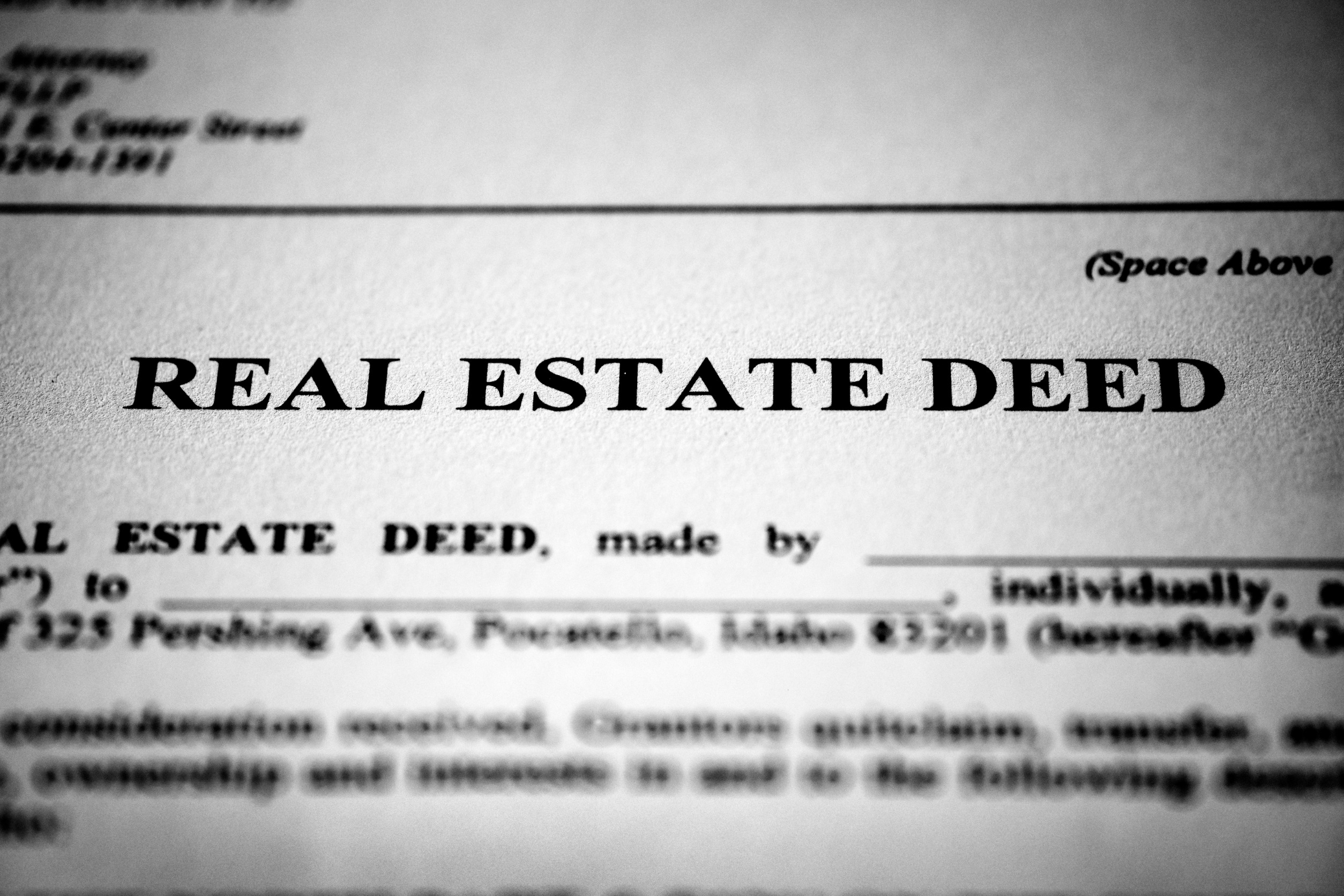
How to correct a Missouri deed is often simple. Small mistakes, like misspelling or omitting a word, can often be corrected with a scrivener’s affidavit. The affidavit describes how the incorrect part of the deed should read, and the affidavit is signed and recorded by the person who prepared the deed. In many cases, deed correction for Saint Louis property owners can be completed without litigation.
Corrective Deed
Bigger deed mistakes cannot always be corrected with a scrivener’s affidavit. However, if all parties to the deed agree, they can sign a corrective deed to resolve the mistake. How to correct a Missouri deed becomes more challenging when not all parties are willing to sign a corrective deed. In that situation, the party claiming the mistake will likely need to file a lawsuit to pursue a deed correction that courts may be asked to approve.
If the mistake is apparent on the face of the deed, the party can introduce evidence to prove how the parties intended the deed to read. For example, the deed might state that a party is to receive a future interest in the property but fail to provide a way to determine when that interest vests. However, if the deed is clear on its face, then correcting the deed may be possible only if the party can prove either a mutual mistake or fraud. Property disputes involving deed errors are often handled by a business litigation attorney with experience in real estate matters.
Mistake or Fraud
A mutual mistake must be proven by clear and convincing evidence showing (i) a preexisting agreement to convey the property, (ii) that the deed does not reflect that agreement because of the mistake, and (iii) that the mistake was mutual among all parties to the deed. The last element is often the most difficult to prove.
For example, in one case, a property owner instructed her attorney to draft a deed conveying her property to all but one of her children. The attorney mistakenly included all of her children in the deed. The child who was supposed to be excluded would not sign a corrective deed. The owner then sued to reform the deed, claiming it did not reflect her wishes. However, because the attorney did not represent the child in drafting the deed, no mutual mistake occurred, and the court refused to reform the deed. If the attorney had represented the child in drafting the deed, the mother may have been able to prove that the child instructed the attorney to omit him from the deed and thereby establish a mutual mistake. Cases involving deed correction that property owners face can require substantial evidence and legal analysis.
A party that cannot prove a mutual mistake can likely prevail only by proving that the mistake was caused by the other party’s fraud, deception, or bad faith that prevented the mistaken party from discovering the mistake in a timely manner.
This article is for general informational purposes only and is not intended as legal advice.
Sewell Law provides experienced representation in Missouri real estate litigation, including matters involving deed correction and property disputes. The firm also assists clients who need a landlord-tenant lawyer for lease disputes and eviction matters, as well as a business litigation attorney for complex commercial conflicts. Please contact Michael Sewell at (314) 942-3232 or michael@sewelllaw.net to discuss your real estate matter.
The choice of a lawyer is an important decision and should not be based solely on advertisements.
© 2023 Sewell Law, LC
